
Broadcast
TV Show Elements in Decline
Canceled
TV shows rarely get a second chance to make their first impression a
lasting one. Is there a way to diagnose
and fix an ill-fated TV series before it reaches the chopping
block? What are the critical elements for a TV show’s success
and
how can they be managed?
Show
ideas, main characters, storylines, relationships and suspense are
fundamental strategic elements that play crucial roles in predicting
whether a show is on the path to success or failure.
Identifying
trends within these elements, diagnosing their causes and taking
corrective action can mean the difference between a long run and a
quick exit.
An
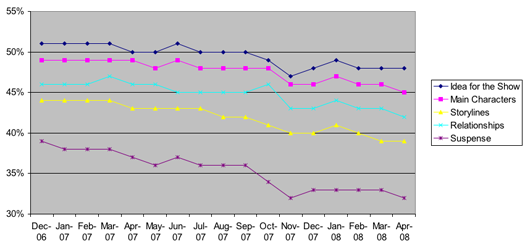
aggregate view across all primetime broadcast TV shows reveals a slow
but steady decline in “excellent” ratings for show elements since late
2006. Storylines and suspense have seen the most significant
declines according to E-Poll’s FastTrack™,
a monthly study that
measures awareness, satisfaction and program momentum.
Aggregated
program element trends are shown below:
Primetime
Broadcast TV Show Element Trends
Source:
FastTrack™ Broadcast – fielded monthly among 1,000 respondents from
December 2006 through April 2008 among a representative sample
of TV viewers age 18 to 49. (n=17,000 total)

Characters
Are Brands, Too
Everywhere
you look, companies are extending their brands. Disney has
generated billions by tapping into the cruise business, Ralph Lauren’s
brand is well established on paint cans and home goods, and Huggies has
successfully extended into all aspects of baby care.
It’s
no different with entertainment characters, whether they’re real or
rendered. Like the equity built by brands, character equity grows over
time and can help companies cross into territories where the core
business may not yet have significant sales. Mickey Mouse, one
of
the longest-enduring and most recognizable characters in the world, is
an excellent example of character equity and extension, as is Winnie
the Pooh.
Aunt
Jemima is famous for her maple syrup. Due to her strong
connection with
breakfast, the company broadened its product lines to include waffle
and pancake mixes, coffee cake and more. The extended association with
breakfast comes naturally to consumers.
The
key to success in brand or character extension is determining where
attributes achieve the best fit with full leverage. Fit is
defined as the categories that consumers will accept from a brand or
character. It’s a character or brand’s stretchability
boundaries. Duracell makes flashlights but not cameras, as
they
don’t have that expertise in the minds of consumers. Leverage
is
defined as the unique properties a brand or character “owns” that
provide a competitive advantage in a new category.
E-Poll’s
new MediaSYNC™ product suite maximizes equity and extension across
celebrity, character, brand and TV program assets by providing unique
insight into equity drivers and enabling more informed
decision-making.
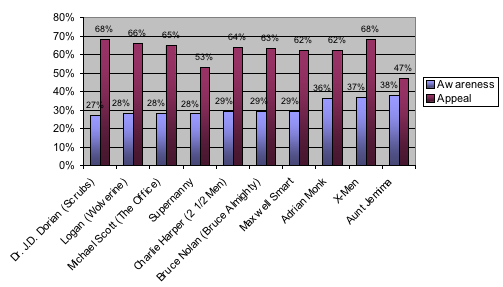
Below
are potentially underexposed characters (moderate awareness and strong
appeal ratings):
Underexposed Characters (Ages 13+)
Source:
E-Score™ Character is conducted quarterly among a representative sample
of 1,500 respondents ages 13+, and encompasses measures of awareness,
appeal and a diverse list of key attributes.
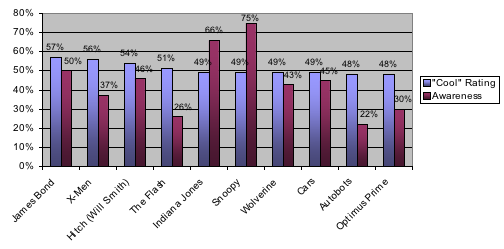
Characters
rated “The Coolest” according to E-Score™
Character, respondents’ ages 13+:
Coolest
Characters (Ages 13+)
Source:
E-Score™ Character is conducted quarterly among a representative sample
of 1,500 respondents ages 13+, and encompasses measures of awareness,
appeal and a diverse list of key attributes.
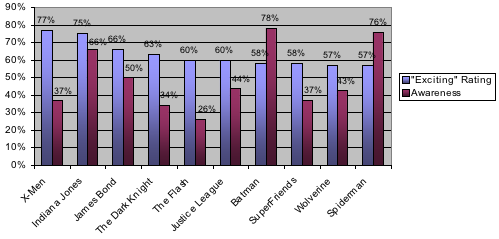
Characters
rated Most Exciting according to E-Score Character, respondents’ ages
13+:
Most
Exciting Characters (Ages 13+)
Source:
E-Score™ Character is conducted quarterly among a representative sample
of 1,500 respondents ages 13+, and encompasses measures of awareness,
appeal and a diverse list of key attributes.
Characters rated “The Coolest” according to E-Score Character,
respondents’ ages 6-12:
Coolest
Characters (Ages 6-12)
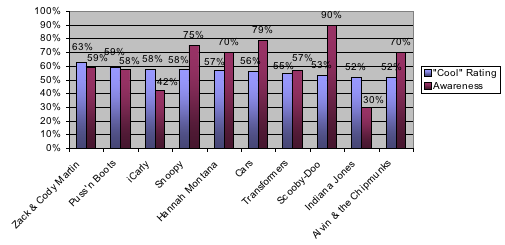
Source:
E-Score™ Character is conducted quarterly among a representative sample
of 1,500 respondents ages 6-12, and encompasses measures of awareness,
appeal and a diverse list of key attributes.
|



